

Summer often brings more opportunities for travel, romantic getaways, outdoor adventures, and quality time with a partner. For many men living with erectile dysfunction (ED), however, these moments can also create anxiety. Instead of focusing on enjoying the experience, they may find themselves worrying about when to take medication, whether it will work, or if unwanted side effects will interfere with intimacy.
At Hightower Men’s Clinic, our goal is to help men understand all available treatment options so they can make informed decisions about their long term sexual health. Rather than relying solely on medication, many patients are now seeking therapies that restore healthier vascular function and support more spontaneous intimacy.
Understanding the Root Cause of Erectile Dysfunction
An erection depends on healthy communication between the nervous system, hormones, blood vessels, and penile tissue. While psychological stress and certain medical conditions can contribute to ED, research shows that vasculogenic erectile dysfunction remains the most common form.
Vasculogenic ED develops when blood vessels supplying the penis become narrowed, damaged, or less responsive over time. Common contributing factors include:
- Aging
- High blood pressure
- High cholesterol
- Diabetes
- Obesity
- Smoking
- Physical inactivity
- Chronic inflammation
Because the penile arteries are much smaller than coronary arteries, changes in vascular health often appear as erectile dysfunction before other cardiovascular symptoms develop. Many medical organizations recognize ED as an important early indicator of vascular disease.
Understanding whether ED is caused primarily by impaired circulation helps determine which treatment approach may provide the greatest long term benefit.
How ED Medications Work
Prescription medications such as phosphodiesterase type 5 (PDE5) inhibitors improve erectile function by relaxing smooth muscle and increasing blood flow within existing blood vessels during sexual stimulation. These medications can be highly effective for many men, particularly those with mild or moderate vascular impairment. However, it is important to understand their limitations.
They Treat Symptoms Rather Than Tissue Health
ED medications temporarily improve blood flow but do not repair damaged blood vessels or encourage new vascular growth.
Once the medication leaves the bloodstream, its effects disappear.
Timing Can Reduce Spontaneity
Depending on the medication prescribed, men may need to take the pill anywhere from 30 minutes to several hours before intimacy.
Many couples find that planning around medication interrupts natural spontaneity and creates unnecessary performance anxiety.
Effectiveness May Decline Over Time
As vascular disease progresses, some men notice that medications become less reliable. If circulation continues to deteriorate, simply increasing the medication dose may not provide better results.
Side Effects May Limit Use
Although generally safe when prescribed appropriately, PDE5 inhibitors can produce side effects including:
- Headaches
- Facial flushing
- Nasal congestion
- Indigestion
- Temporary visual disturbances
- Dizziness
These medications are also not appropriate for men taking nitrate medications for heart disease due to potentially dangerous drops in blood pressure.
How Pulse Wave Therapy Works
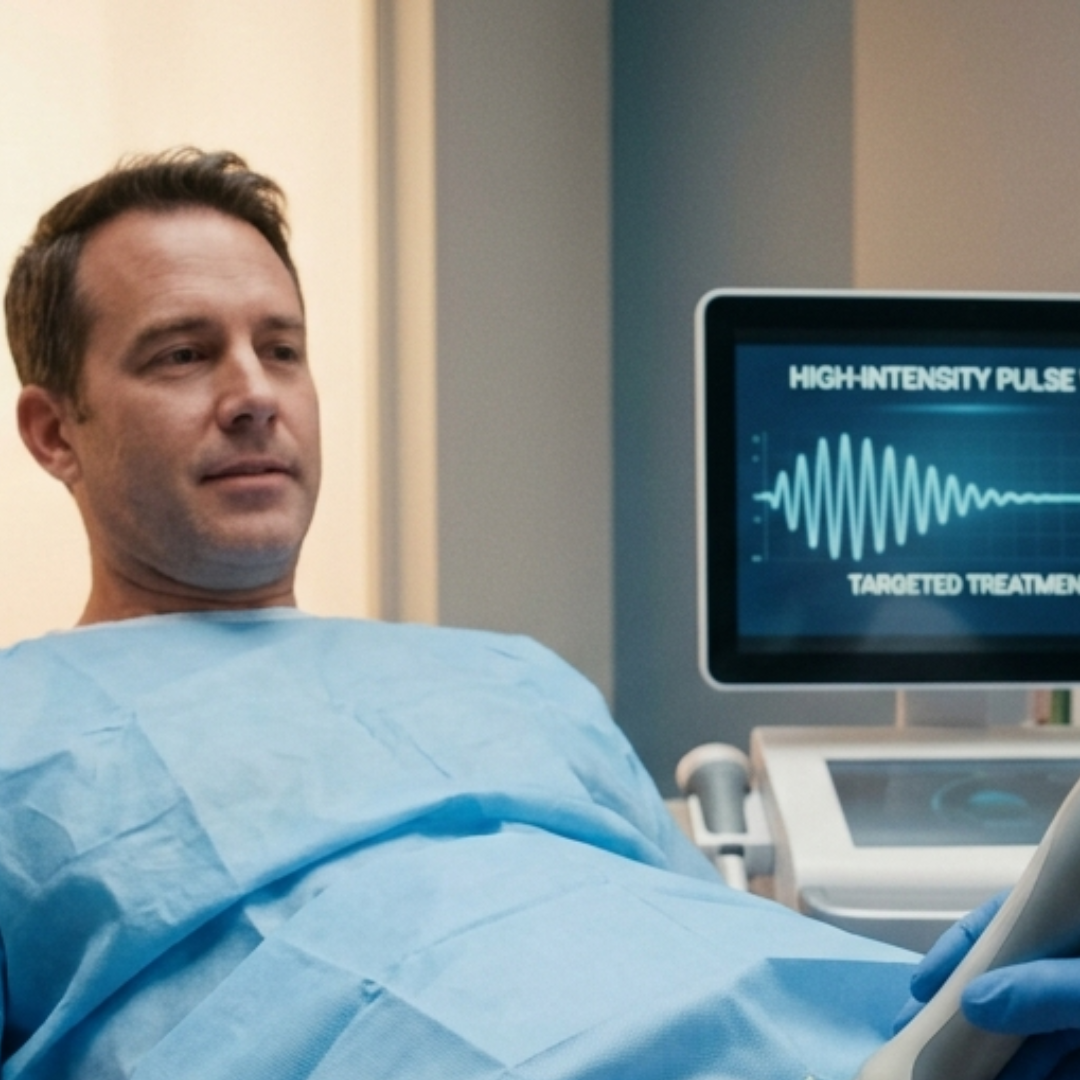
Pulse Wave Therapy uses low intensity acoustic waves that are delivered externally to targeted tissue. Unlike medication, Pulse Wave Therapy is designed to stimulate the body’s own natural healing response rather than temporarily changing blood vessel function. Research suggests that low intensity shockwave therapy promotes several regenerative processes.
Stimulates Angiogenesis
One of the most important biological effects is angiogenesis, the formation of new microscopic blood vessels. These additional blood vessels help improve circulation throughout erectile tissue and increase the body’s ability to deliver oxygen and nutrients.
Improves Vascular Function
Acoustic waves create controlled mechanical stimulation that encourages healthier endothelial function. The endothelium is the inner lining of blood vessels responsible for regulating circulation. Healthier blood vessels respond more effectively during sexual arousal.
Encourages Tissue Repair
Pulse Wave Therapy activates cellular signaling pathways involved in tissue remodeling and repair. This may improve elasticity and overall vascular health within erectile tissue.
Supports Natural Erections
Because the therapy focuses on improving circulation rather than creating a temporary chemical effect, many men experience improved erectile response without needing to plan intimacy around medication. Here is the requested comparison organized into a scannable, professional table format for your medical wellness audience:
Pulse Wave Therapy Versus ED Medication
| Comparison Metric | Traditional ED Medication | Targeted Pulse Wave Therapy (PWT) |
| Goal of Treatment | Provides temporary symptom relief while the medication remains biochemically active in the bloodstream. | Addresses structural vascular health with the goal of restoring long term, natural erectile function. |
| Blood Flow Mechanism | Temporarily increases localized blood flow by forcing artificial dilation through existing, compromised blood vessels. | Supports the repair of healthier blood vessels and actively stimulates new microvascular growth via angiogenesis. |
| Convenience and Spontaneity | Requires strict behavioral timing, scheduling, and pre planning prior to moments of intimacy. | Treatment occurs during brief, scheduled office visits, allowing for complete, natural spontaneity after completing therapy. |
| Systemic Side Effects | Frequently produces systemic side effects (e.g., headaches, facial flushing, nasal congestion) as the drug circulates throughout the entire body. | Minimal systemic side effects because the regenerative acoustic wave energy is localized, non-invasive, and completely drug free. |
| Long Term Benefits | Benefits disappear completely as soon as the medication is metabolized and leaves the system. | Clinical studies show lasting structural improvements that may persist for many months, especially when combined with healthy lifestyle habits. |
Who May Benefit Most from Pulse Wave Therapy
Although every patient requires an individualized medical evaluation, Pulse Wave Therapy is often considered for men who:
- Want to reduce dependence on ED medication
- Have mild to moderate vasculogenic erectile dysfunction
- Experience inconsistent medication results
- Cannot tolerate medication side effects
- Prefer a non-surgical treatment
- Want to improve overall vascular health
- Value spontaneity during intimacy
A comprehensive evaluation helps determine whether regenerative treatment is appropriate based on overall health, medical history, and the underlying cause of ED.
Supporting Better Results Beyond Treatment
Pulse Wave Therapy works best when combined with everyday habits that improve overall vascular health. Consider these professional strategies for 2026:
- Regular Aerobic Exercise: Consistent cardiovascular movement significantly improves endothelial function, capillary health, and systemic circulation.
- Heart Healthy Nutrition: A diet rich in vegetables, fruits, whole grains, lean proteins, healthy fats, and fiber supports flexible blood vessels while dropping baseline inflammation.
- Metabolic Weight Management: Maintaining a healthy body weight reduces the structural workload on the cardiovascular system and optimizes hormone balance.
- Blood Sugar Control: Actively managing insulin resistance and blood sugar spikes helps protect the small, delicate blood vessels that are essential for erectile function.
- Smoking Cessation: Eliminating tobacco use stops the ongoing damage to the inner blood vessel lining and drastically reduces the risks of progressive vascular decline.
Your Personalized Path to Natural Erections Without Depending on Medication
At Hightower Men’s Clinic, restoring erectile function begins with a private, comprehensive medical evaluation to identify the root causes of your symptoms. If suitable, we develop a personalized regenerative plan using Pulse Wave Therapy to improve blood flow and tissue health, offering a path to more natural, spontaneous erections. By investing in long-term vascular wellness rather than temporary symptom management, you can regain your confidence and enjoy this summer’s travels and relationships with greater ease.
Schedule your confidential consultation today and discover whether Pulse Wave Therapy can help you move beyond ED medication and toward lasting sexual wellness.
FREQUENTLY ASKED QUESTIONS (FAQ)
Q1: Is Pulse Wave Therapy better than ED medication?
Both treatments have important roles. ED medications provide temporary symptom relief, while Pulse Wave Therapy aims to improve the underlying vascular health responsible for many cases of erectile dysfunction. The most appropriate option depends on your medical evaluation and the cause of your ED.
Q2: Can I stop taking ED medication after Pulse Wave Therapy?
Some men are able to reduce or discontinue medication following successful treatment, while others may continue using medication at lower doses. Individual results vary depending on vascular health and other medical factors.
Q3: Does Pulse Wave Therapy hurt?
Most patients describe the treatment as comfortable. Pulse Wave Therapy is non-invasive, requires no anesthesia, and typically allows patients to return to normal daily activities immediately after each session.
Q4: How long do Pulse Wave Therapy results last?
Clinical studies have demonstrated improvements lasting up to 12 months or longer in many appropriately selected patients. Maintaining healthy lifestyle habits may help prolong results.
Q5: Who is the best candidate for Pulse Wave Therapy?
Men with mild to moderate vasculogenic erectile dysfunction, particularly those seeking a non-drug treatment or wanting to reduce dependence on medication, are often good candidates. A comprehensive medical consultation is necessary to determine whether the therapy is appropriate for your specific condition.