

Discover advanced, non-invasive Peyronie’s disease treatment in Hightower Men’s Clinic, using targeted regenerative therapy to reduce plaque related pain, improve tissue flexibility, and support a safer return to natural intimacy.
Peyronie’s disease is far more than a cosmetic concern. For many men, the development of penile curvature and painful erections creates anxiety, avoidance of intimacy, and a loss of sexual confidence that can affect every part of daily life.
At Hightower Men’s Clinic, our focus is on helping men manage Peyronie’s disease through medically guided, non-invasive regenerative care. Rather than relying solely on injections or surgery, our clinical protocols use targeted Pulse Wave Therapy to support tissue remodeling, improve blood flow, and reduce the biological drivers of pain and scar rigidity.
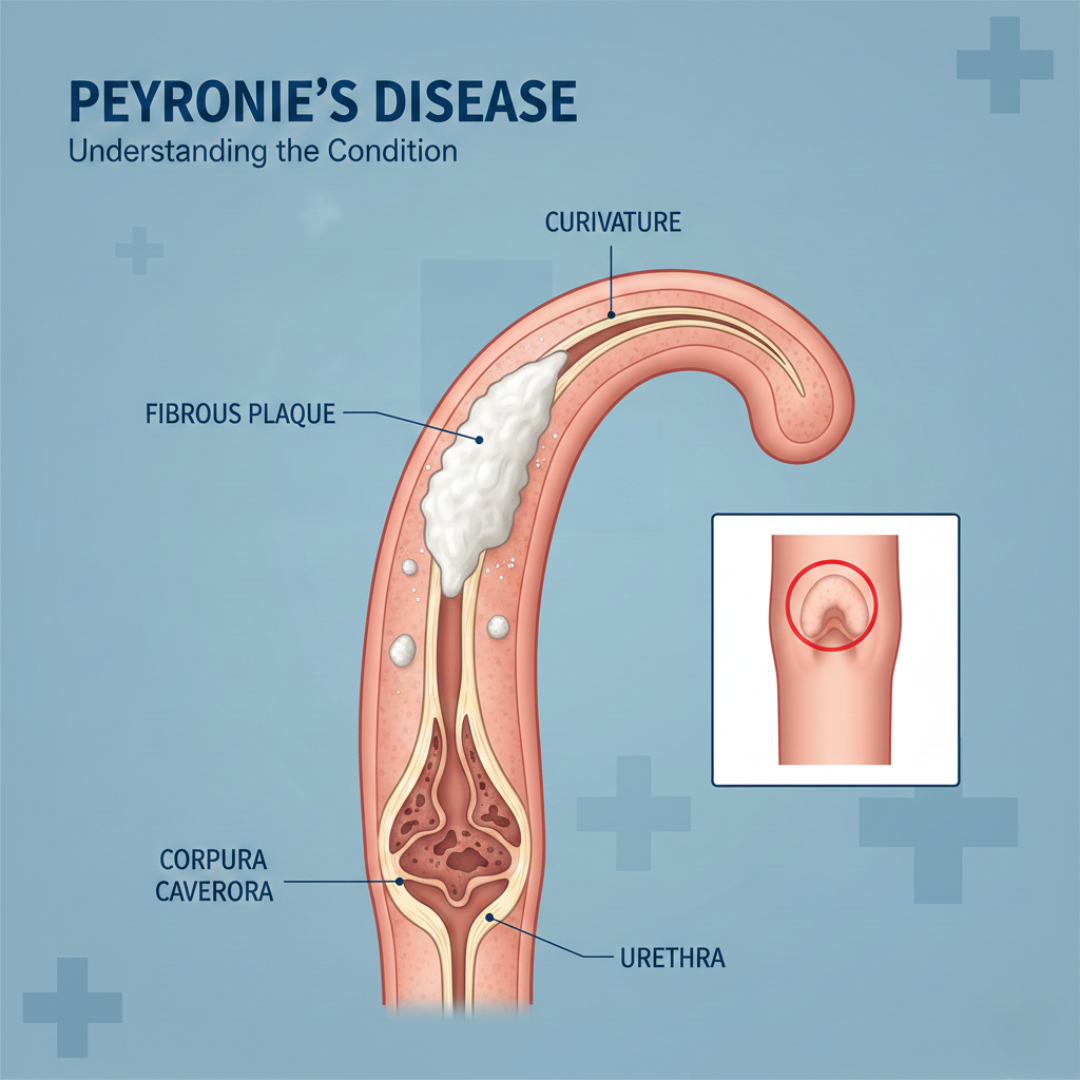
Understanding Peyronie’s Disease and Why Curvature Develops
Peyronie’s disease occurs when fibrous scar tissue, called plaque, forms within the tunica albuginea. This is the strong connective tissue sheath that surrounds the erectile chambers of the penis. During an erection, healthy tunica tissue expands symmetrically. Scar tissue does not.
As a result, the penis bends toward the side of the plaque. In many men, this process is accompanied by pain, shortening, and a reduction in rigidity.
Large clinical studies estimate that Peyronie’s disease affects approximately 6 to 10 percent of men, with higher rates seen in men over age 50 and in those with diabetes, vascular disease, or connective tissue disorders.
The condition typically progresses through two stages:
- The active inflammatory phase, when pain, evolving curvature, and progressive plaque development occur
- The stable phase, when curvature and plaque size stop changing but deformity may remain permanent
Early biological intervention is most effective during the active phase when tissue remodeling pathways are still responsive.
Why Peyronie’s Scar Tissue Behaves Differently Than Normal Injury
Unlike muscle or skin injuries, Peyronie’s plaque is composed of dense, disorganized collagen fibers. Research demonstrates that this fibrotic tissue contains elevated transforming growth factor beta signaling, reduced elastic fiber content, and impaired microvascular support.
These biological changes cause three major problems:
- Reduced tissue elasticity
- Impaired oxygen and nutrient delivery
- Ongoing low grade inflammation within the plaque
Over time, the plaque becomes mechanically rigid and resistant to normal healing processes.
The Limitations of Traditional Peyronie’s Disease Treatments
Oral medications
Vitamin E, potassium para-aminobenzoate, and other oral therapies have been studied for decades. Most controlled trials show limited or inconsistent benefit for plaque size or curvature.
Intralesional injections
Collagenase and other injectable agents can reduce curvature in selected patients. However, injections require repeated needle placement directly into sensitive penile tissue and carry risks such as bruising, hematoma, and corporal rupture in rare cases.
Surgical correction
Surgery remains the most definitive option for severe deformity. It is typically reserved for men with stable disease and significant functional impairment. Surgical risks include penile shortening, erectile dysfunction, and altered sensation.
Many men prefer a lower risk, non-invasive approach before considering surgical intervention.
Pulse Wave Therapy and Peyronie’s Disease
Pulse Wave Therapy uses low intensity acoustic energy delivered externally to the region of plaque. The treatment does not puncture the skin, does not require anesthesia, and is performed in an outpatient setting.
From a biological perspective, acoustic wave therapy initiates mechanotransduction. This process activates cellular signaling pathways that influence inflammation control, collagen remodeling, and microvascular growth.
How Pulse Wave Therapy Supports Peyronie’s Tissue Remodeling
Improves microcirculation around the plaque
Clinical studies show that low intensity shockwave therapy increases local blood flow through angiogenesis. Improved perfusion enhances oxygen delivery and supports metabolic activity in surrounding healthy tissue.
Modulates inflammatory signaling
Acoustic wave therapy influences inflammatory mediators and may help reduce the persistent inflammatory environment that drives plaque progression during the active phase of Peyronie’s disease.
Supports collagen reorganization
Experimental and clinical data suggest that mechanical stimulation alters fibroblast behavior and collagen deposition patterns. This can contribute to improved tissue pliability and reduced mechanical tension during erection.
Provides analgesic benefit
Shockwave therapy has well documented pain reducing effects through sensory nerve modulation and decreased local inflammation. This is particularly relevant for men experiencing painful erections.
Benefits of Choosing a Non Invasive Regenerative Approach
Men who pursue non invasive regenerative therapy for Peyronie’s disease often experience:
- Reduced penile pain during erection
- Improved tissue flexibility and comfort
- Enhanced blood flow to surrounding erectile tissue
- Improved confidence and willingness to resume intimacy
- Lower risk compared to injection or surgical options
While no therapy can guarantee full correction of curvature, regenerative approaches focus on improving function, comfort, and quality of life.
Your Personalized Path to Restoring Comfort, Confidence, and Connection
At Hightower Men’s Clinic, Peyronie’s disease care is private, individualized, and medically guided. Your consultation focuses on understanding how plaque, pain, and curvature are affecting your quality of life and sexual confidence.
From there, our clinical team builds a non-invasive regenerative treatment plan designed to improve tissue health, support safer erections, and reduce the biological drivers of discomfort.
You deserve care that protects your dignity and your long term sexual wellness. Schedule your confidential Peyronie’s disease consultation at Hightower Men’s Clinic today and begin your personalized, non surgical path back to comfort, confidence, and connection.
Frequently Asked Questions (FAQ)
Q1: Can Peyronie’s disease go away on its own?
A: In a small percentage of men, pain may improve over time. However, established plaque and curvature rarely resolve completely without targeted intervention.
Q2: Is Pulse Wave Therapy safe for Peyronie’s disease?
A: Low intensity acoustic wave therapy is non-invasive and has demonstrated a strong safety profile when performed under medical supervision. It does not involve needles or incisions.
Q3: Can this therapy reduce penile curvature?
A: The primary benefits are reduction of pain and improved tissue flexibility. Some men experience modest curvature improvement. Results vary based on disease stage and plaque characteristics.
Q4: Can Pulse Wave Therapy be combined with other treatments?
A: Yes. Regenerative therapy can be integrated with physician guided medical management when clinically appropriate.
Q5: Is treatment covered by insurance?
A: Coverage varies by provider and plan. Many regenerative therapies are considered elective. Our clinic team will review your options and provide transparent pricing during your consultation.